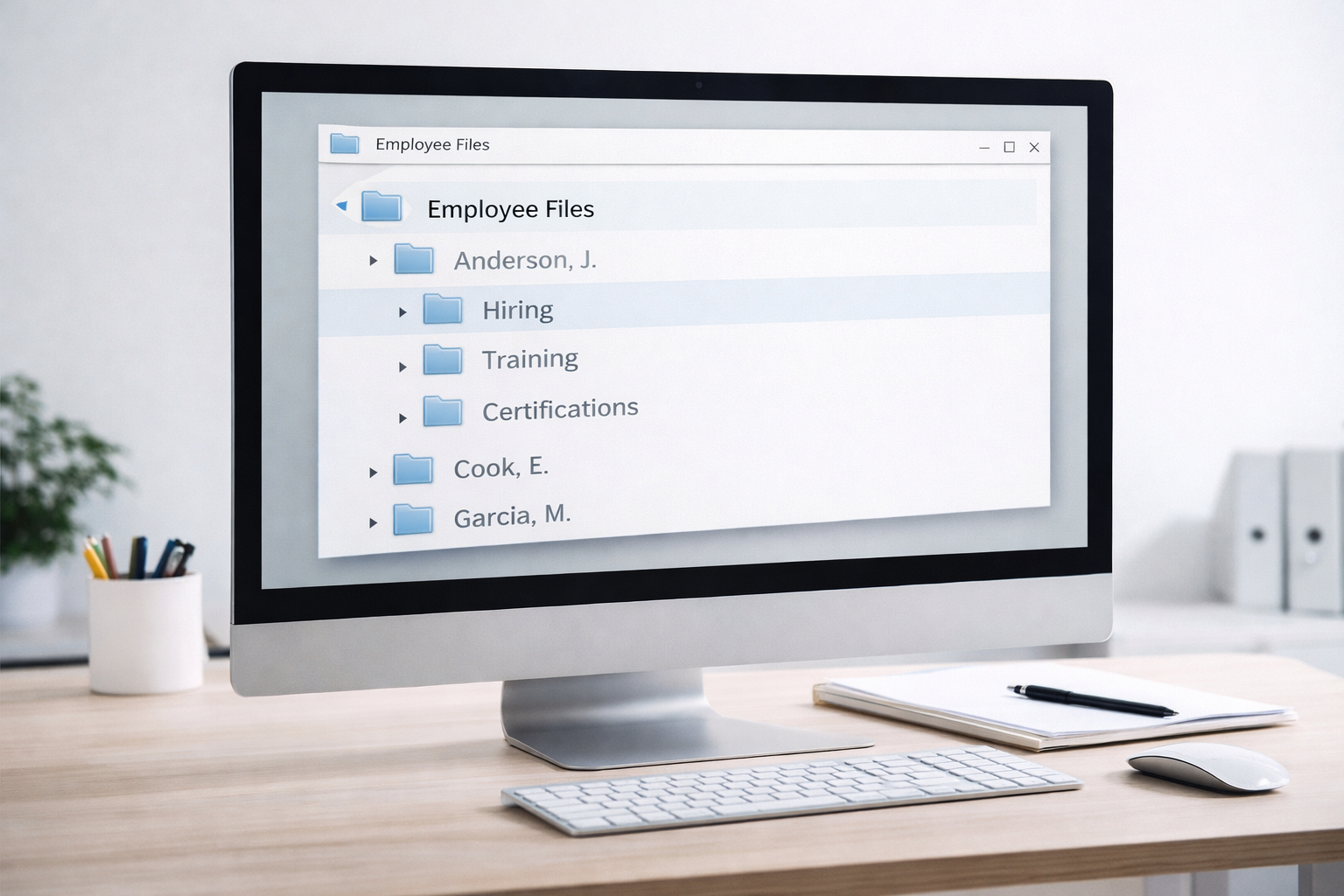
Many small businesses focus on employee file documentation to confirm regulatory requirements and maintain accessible records. But organized employee files provide value far beyond regulatory readiness.
Well-organized employee documentation improves how your business operates, supports better employee management, and reduces stress when questions arise. For small business owners, understanding this broader value helps shift documentation organization from a compliance task to an operational priority. When employee files are structured and easy to navigate, your business runs more smoothly.
Why Employee File Documentation Supports Compliance
First, it’s important to acknowledge the compliance foundation. Organized employee files allow businesses to verify regulatory requirements quickly and confidently. Businesses can quickly access documentation during inspections or audits. Structured, easy-to-follow files show that a business maintains professional practices and takes documentation responsibilities seriously.
Organized documentation clearly demonstrates that the business maintains background checks, certifications, training records, and hiring documentation. But compliance is only part of the story.
How Organized Files Improve Daily Business Operations
Beyond compliance, organized employee documentation improves everyday business operations.
Faster Onboarding for New Employees
When employee files follow a consistent structure, managers and HR personnel can quickly understand what documentation already exists for each employee.
You can easily verify:
- what training has been completed
- which certifications are current
- what documentation still needs attention
Contrast that with disorganized files, where finding a single document may require searching through multiple folders or paperwork stacks. Over time, those extra minutes add up.
Better Performance Management
Organized employee files help support better conversations around performance. Structured documentation allows managers to reference previous discussions, performance feedback, and expectations. This creates clearer communication and more consistent decision-making.
Employees notice when businesses manage their employment records professionally. In contrast, when files are disorganized, performance history may be scattered or missing. Conversations happen without documentation, and decisions may appear inconsistent.
Smoother Staff Transitions
Employee transitions are inevitable whether someone changes roles or leaves the company.
When files are organized, transitions are easier to manage. You can quickly verify training completion, certifications, responsibilities, and access levels. New team members stepping into a role can quickly understand previous responsibilities and completed work.
Without organized documentation, transitions can become chaotic. Important information may be difficult to locate or lost entirely.
Easier Insurance and Documentation Reviews
If an insurance claim or compliance question arises, organized documentation helps support your position.
Clear records of hiring practices, training completion, and compliance efforts provide valuable documentation if outside questions arise. Organized files demonstrate that your business maintains consistent practices and takes employee documentation seriously.
How Organized Files Help Protect the Business
Organized employee files also provide important protection for the business itself.
Clear Record of Hiring Practices
Consistent hiring documentation shows that your company follows fair and documented hiring practices. If employment questions or disputes arise, organized records provide clear evidence of how decisions were made. Many hiring records also include federally required employment eligibility verification documents such as Form I-9.
Evidence of Fair Treatment
Many employment disputes come down to documentation.
Organized files that include performance notes, training opportunities, and documented conversations create an objective record of employment history. This documentation helps demonstrate fairness and consistency across employees.
Reduced Liability Risk
In regulated industries, organized documentation helps reduce liability risk.
Businesses can demonstrate that:
- background checks were completed
- certifications were verified
- training requirements were met
- documentation was maintained properly
These records can be critical if compliance questions arise.
Better Record Keeping for Payroll and Benefits
Organized employee files also support accurate payroll and benefit administration.
When documentation is clear and accessible, it is easier to confirm:
- payroll authorizations
- benefit elections
- employee changes or updates
This reduces payroll errors and helps avoid unnecessary disputes.
How Organized Files Influence Company Culture
Employee file organization may seem like an administrative task, but it can also influence company culture.
Signals Professionalism
When employee documentation is organized and maintained carefully, employees notice. It signals that the business handles their information responsibly and operates with professionalism. This helps build trust between employees and leadership.
Demonstrates Organizational Competence
Well-organized personnel systems often reflect a well-run organization.
Employees tend to feel more confident working for a business that demonstrates structure and organization in its processes. Disorganized documentation can create the opposite impression.
Creates Consistency and Fairness
Consistent documentation practices help reinforce fairness across the organization. When employee files follow the same structure and documentation standards, it shows that processes are applied equally to everyone. Consistency helps reduce confusion and reinforces trust in leadership decisions.
Supports Employee Retention
Employees are more likely to stay with organizations that demonstrate professionalism and structure. While documentation alone does not determine retention, it contributes to a workplace environment where employees feel valued and respected.
The Operational Value of Organized Documentation
Beyond compliance and culture, organized employee documentation simply makes your business operate more efficiently. When you need information, you can find it.
When decisions need to be made about scheduling, promotions, or assignments, you have the documentation available to support those decisions. Organized documentation saves time, reduces frustration, and allows business owners to focus on running the business rather than searching for paperwork.
Building Employee File Documentation Systems
Creating organized employee files does not require expensive software or complex systems. What matters most is consistency.
Effective file organization usually includes:
Consistent file structure
All employee files follow the same categories and format.
Clear labeling
Folders and sections are clearly named so documents are easy to locate.
Systematic filing process
New documents are added using a defined process.
Regular maintenance
Files are periodically reviewed to ensure documentation remains current.
Defined responsibility
Someone is responsible for maintaining the system.
Small, consistent systems create long-term organizational clarity.
Small Improvements Create Big Impact
Even small improvements in file organization can have noticeable benefits. Try organizing just one employee file so documents are clearly labeled and easy to locate. That small change often demonstrates how valuable structured documentation can be. When that approach is applied across the organization, the benefits multiply. Better organization leads to better operations.
Getting Started with Employee File Organization
If your employee files feel disorganized today, start with one small improvement.
Consider beginning with one of the following:
- Create a consistent folder structure for digital files
- Organize physical files using the same categories
- Track time-sensitive items like certifications or licenses
Once the basic structure is in place, improvements become easier to maintain. Over time, those small changes compound.
Next Steps
One practical way to begin improving documentation organization is to review a few employee files.
Pull two or three files at random and ask:
- Are they organized consistently?
- Could someone else find a specific document quickly?
- Is all required documentation present?
That simple review can highlight opportunities to strengthen your documentation systems. Organized employee files create ripple effects throughout a business supporting better operations, stronger compliance practices, and greater confidence in your documentation. Structured employee file documentation systems help small businesses maintain clarity, consistency, and confidence in their records.